Choosing wood stair railings or timber treads starts with their different jobs. Species, grain and coating affect what you see, while the specified part and complete assembly determine suitability. A stain name alone is not a finished specification.
Compare real finished samples
Place samples beside the flooring and trim that will remain. Natural variation, sheen and room light can make a close match more complicated than selecting the same color name. Decide whether you want continuity or a deliberate contrast.
Record the species and coating as well as the appearance. The USDA Wood Handbook explains moisture and finish behavior. A timber product suitable for an interior rail should not automatically be assumed suitable as an outdoor tread.
Give each part a clear specification
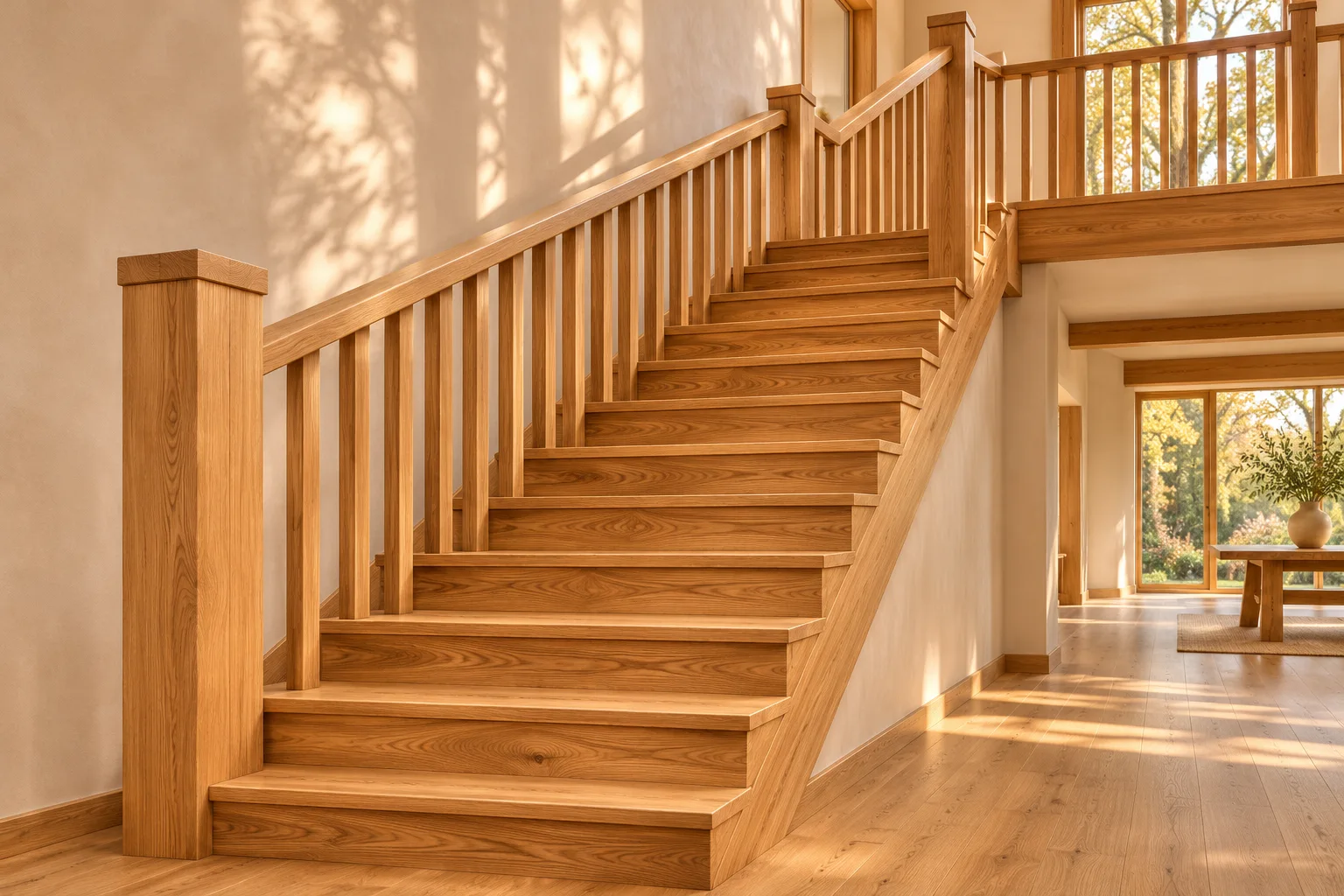
Treads, risers, posts, balusters and rails need compatible details. Check tread edges, handrail transitions and the upper landing in the drawing. A well-matched wood tone cannot resolve an incorrect dimension or an unsuitable connection.
Commercial use needs its own review of occupancy, construction, fire and egress provisions and the part timber is intended to play. Do not interpret a general yes-or-no answer as permission for every building. Ask the responsible designer to establish the actual requirements.
The Timeless Appeal of Timber
The use of timber in staircase construction dates back centuries, and its appeal has not waned over the years. Timber offers a natural, cozy aesthetic and is incredibly versatile, making it a staple in homes across the globe.
Types of Wood Used in Staircase Designs
When it comes to timber staircases, there’s a variety of wood types to consider:
- Oak: Known for its strength and durability.
- Pine: A more budget-friendly option.
- Mahogany: Offers rich colors and intricate grain patterns.
- Maple: Known for its light color and resilience.
Advantages of Timber Staircases
There are several advantages to opting for a timber staircase:
- Aesthetic Appeal: Offers a timeless and warm look.
- Durability: High-quality timber can last for years.
- Customization: Easy to paint, stain, or carve for a personalized look.
Design Styles for Timber Staircases
The possibilities are endless when it comes to designing a timber staircase. Whether you prefer a traditional, curved style or a sleek, modern design, wood can be shaped to fit your vision. Some popular styles include:
- Straight Run
- Spiral
- L-Shape
- Winder
Durability and Maintenance
Timber staircases are not only beautiful but also durable. With proper maintenance like regular cleaning and occasional refinishing, your timber staircase can look as good as new for years.
Safety Considerations
Timber staircases should be designed with safety in mind. Options like non-slip finishes, sturdy handrails, and well-sized treads can make all the difference.
Customization and Personalization
Use custom staircase planning to resolve the opening, support and complete railing before ordering shaped timber parts. The wood tone can be selected alongside the room, but its appearance cannot settle the dimensions or connections.
Common questions
- Is timber a sustainable choice for staircases?
Yes, especially if you opt for certified, sustainably-sourced wood.
- How often does a wooden staircase need maintenance?
It depends on the wood type and the finish, but generally, some upkeep is required every few years.
- Can timber staircases be used in commercial settings?
The proposed timber role, occupancy, construction type and applicable fire, egress and other provisions need review. The responsible designer should establish whether the specified assembly is permitted; there is no blanket answer for every commercial building.
- How much does a timber staircase cost?
Costs vary widely depending on the type of wood and the complexity of the design.
- Can I combine timber with other materials like metal or glass?
Definitely, multi-material staircases are becoming increasingly popular.
Conclusion
Wood can connect the stair with the room through grain, color and texture. Compare species and finish samples with the adjacent flooring, and distinguish the tread specification from the handrail, posts and decorative trim.
Mention the surrounding flooring and the timber parts you want to retain or replace. Discuss the wood and finish choices with their intended roles clear.