
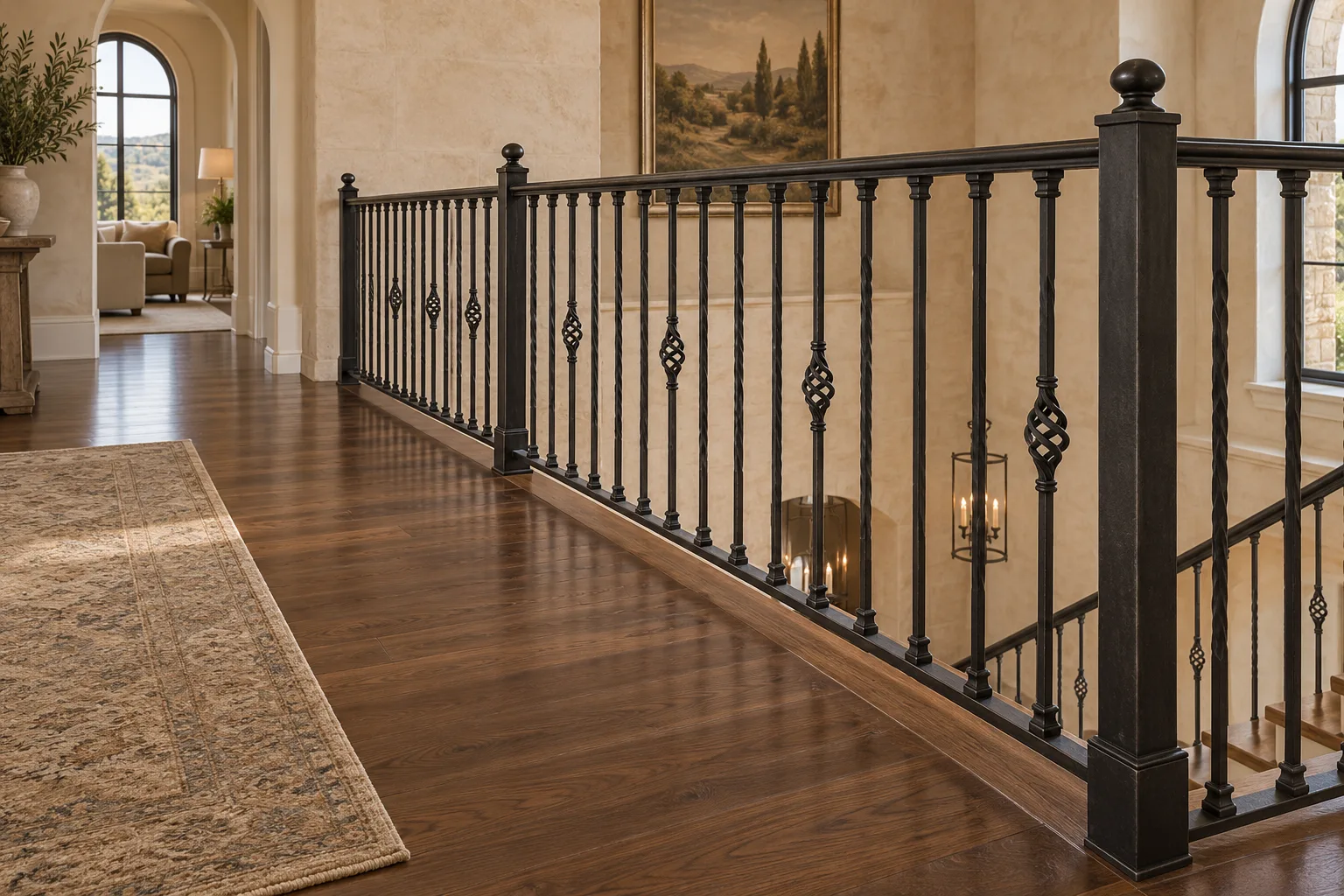
Character in every detail.
Iron Railings
Explore decorative iron-style stair railings, baluster patterns, wood handrail combinations, finishes and replacement considerations for a Utah project.
Choose the pattern, then check the actual product.
Iron-style balusters can add detail to a staircase or make an existing wood railing feel less heavy. The pattern needs to work with the handrail and posts, and the material behind the product name needs to be clear.
A pattern that works across the whole flight
Straight bars, restrained twists and basket details create different visual rhythms. A pattern that looks balanced in a short display can become busy across a long flight or an upper landing. Ask to see the proposed sequence over the actual runs, including the final space beside a newel or wall.
Consider the handrail and post shape first. Decorative metal can sit comfortably under a simple timber rail, while an ornate rail and ornate infill may compete for attention. The aim is a consistent assembly, not a collection of favorite individual parts.
What does iron mean on the specification?
Iron is often used as a style or product-category name. It does not necessarily mean traditional wrought iron, and it does not tell you whether a member is solid or hollow.
For example, L.J. Smith describes its ornamental iron balusters as mild steel, with hollow and some solid options. That describes its own range, not every supplier’s products. Ask for the actual material, construction, finish and intended environment in the proposal.
Replacing wood spindles with metal
Existing handrails and newels may be worth retaining, but their connections, old holes and geometry need assessment. New metal balusters can require different fixing details. Decorative shoes can conceal a connection visually; they do not establish its strength or make a poorly prepared hole acceptable.
Confirm how the installer will handle the underside of the handrail, the tread or base rail, gaps left by removed parts and any refinishing. Keep the stair and landing guarding in the same scope so a tidy flight does not meet an unfinished or inconsistent upper edge.
Finish, cleaning and repair
Review the sheen and texture beside the wood finish, not only the color name. Dark coatings can show dust and cleaning marks differently from textured or lighter finishes. Ask for the supplier’s cleaning instructions and whether the coating is intended for the actual indoor or outdoor location.
Plan how a scratched baluster or damaged fitting could be repaired or replaced. Keep product details and finish information after installation; a later near-match can be more noticeable when it sits within a repeated pattern.
Common iron-style railing questions
Can I mix different baluster shapes?
Yes, a repeated combination can be part of the design. Draw the complete sequence, including corners and landing runs, and check that the proposed assembly meets the applicable spacing and performance requirements. Avoid deciding from isolated product photographs.
Are hollow balusters automatically a poor choice?
No. Hollow versus solid is one product characteristic, not a complete performance verdict. The specified product, connections, supporting rail and posts need to be assessed together. Choose from documented systems rather than judging by weight alone.
What affects the price?
The selected balusters and pattern are only part of the price. Retaining or replacing the timber rail and posts, preparing old holes, matching finish and repairing nearby surfaces can change the job. Compare the complete stair and landing arrangement, with a clearly stated number of parts and the same finishing scope.
Plan an iron-style railing update
Tell us what is there now, which timber parts you want to retain and whether you prefer a plain or decorative pattern. Include your project city and mention photographs of the existing rail, posts and landing.
Discuss an iron-style railing project, or compare all-wood railing designs before settling on the contrast.
Tell us about the project.
What are
you planning?
Start with your city, whether the work is a new build or remodel, and what you want to change. Mention any plans or photographs you already have; final measurements can follow.
Discuss Your Project