
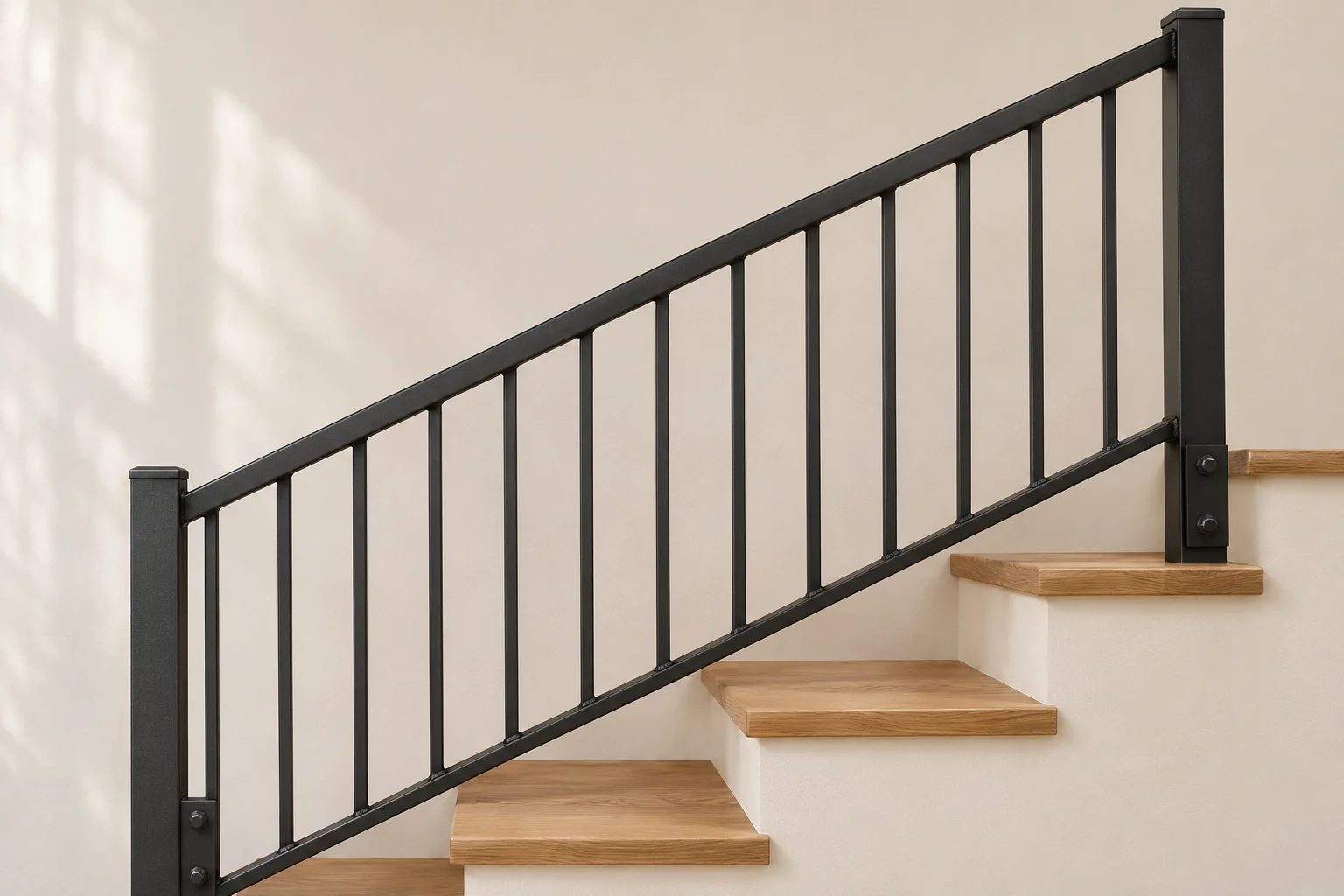
Stair railings
The finishing line.
Compare wood, steel, glass, iron-style and cable stair railings in Utah. Understand appearance, handrails, mounting, replacement work and maintenance differences.
Compare the whole railing assembly.
Wood, steel, glass, iron-style balusters and horizontal cable create different views through a stair. Choose the handrail, posts, infill and landing transitions together, then check the supporting surfaces and care requirements.
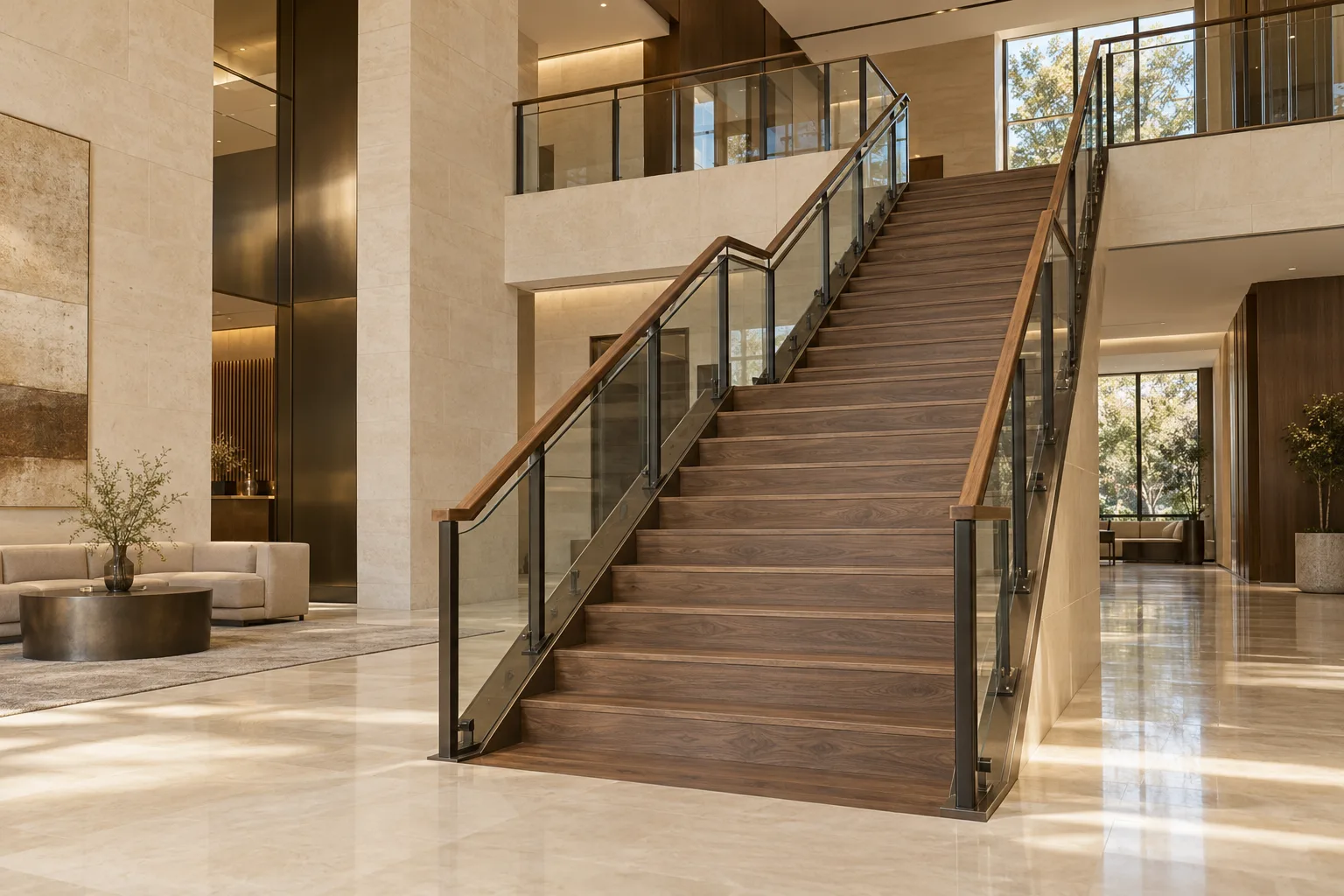
Glass Railings
Glass railing can keep light and sightlines open around a stair. The finished appearance depends on much more than the glass: panel joints, exposed edges, mounting hardware and the handrail all remain visible.
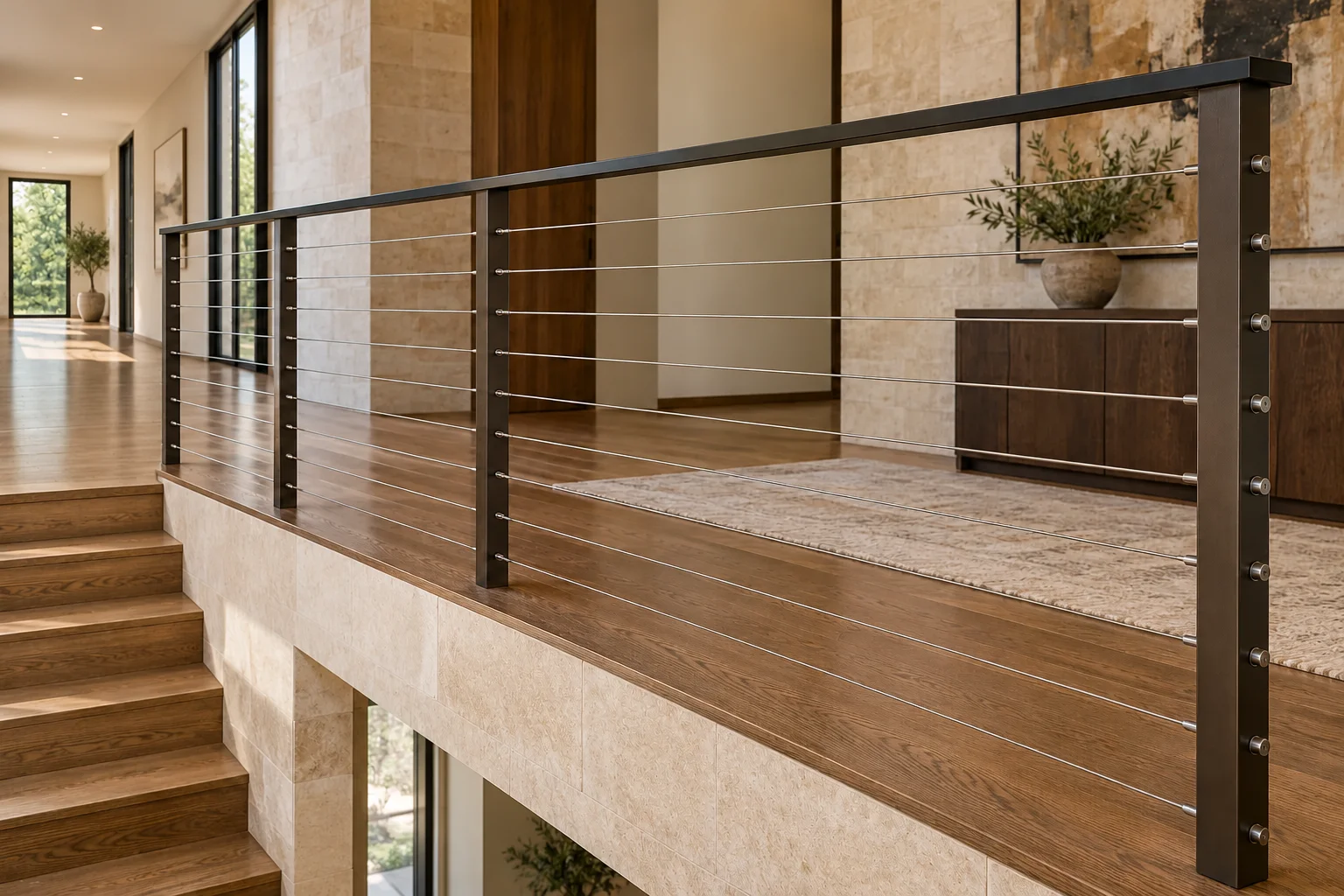
Cable Railings
Cable railing keeps the view open with fine horizontal lines. Its posts, top rail, end fittings and anchors do the less visible work, so choose it as a complete system rather than a set of wires added to an existing rail.
Steel Railings
A steel railing can be quiet and minimal or give a stair a stronger outline. With fewer decorative details, the proportions, weld finishing, post bases and landing connections become especially important.
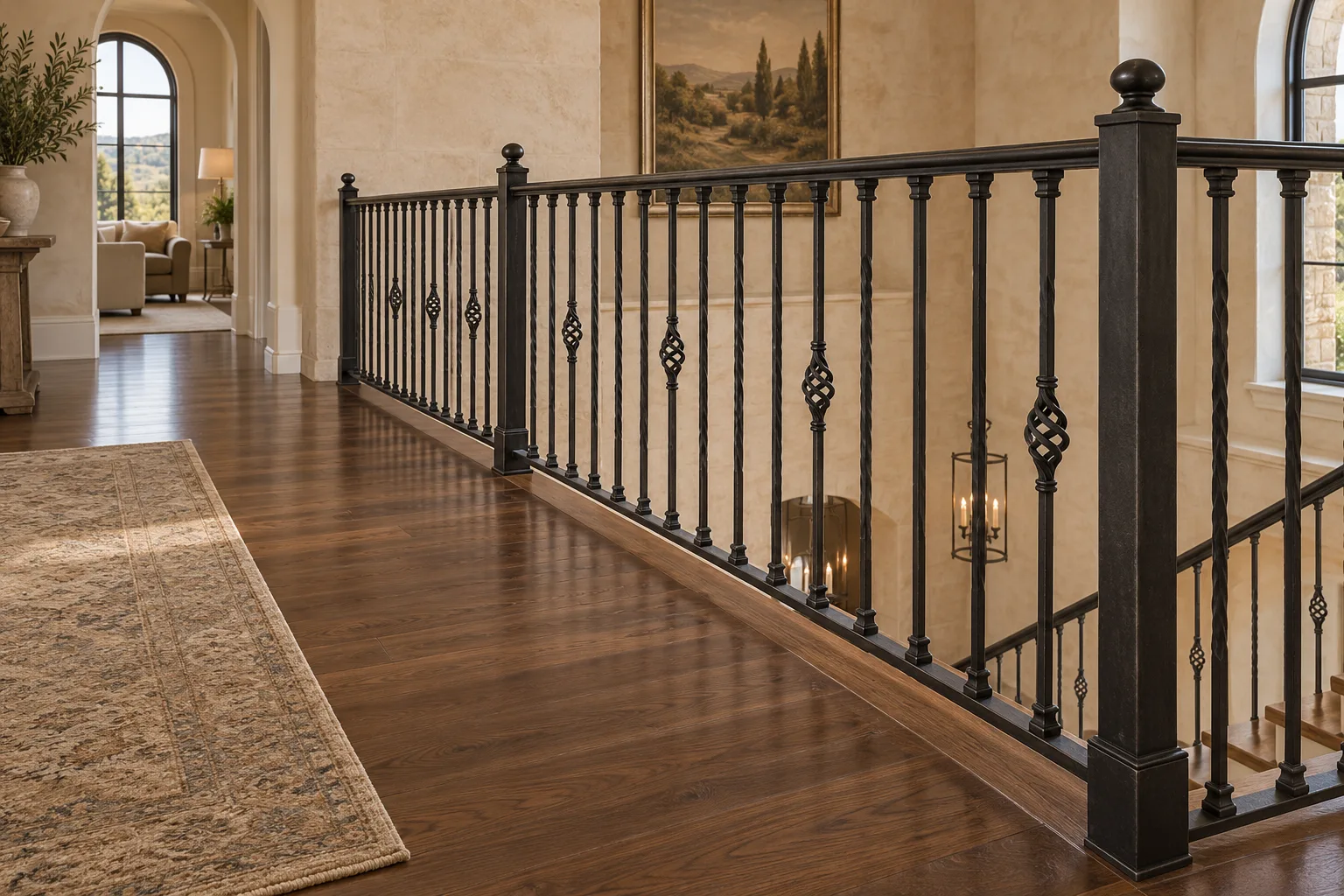
Iron Railings
Iron-style balusters can add detail to a staircase or make an existing wood railing feel less heavy. The pattern needs to work with the handrail and posts, and the material behind the product name needs to be clear.
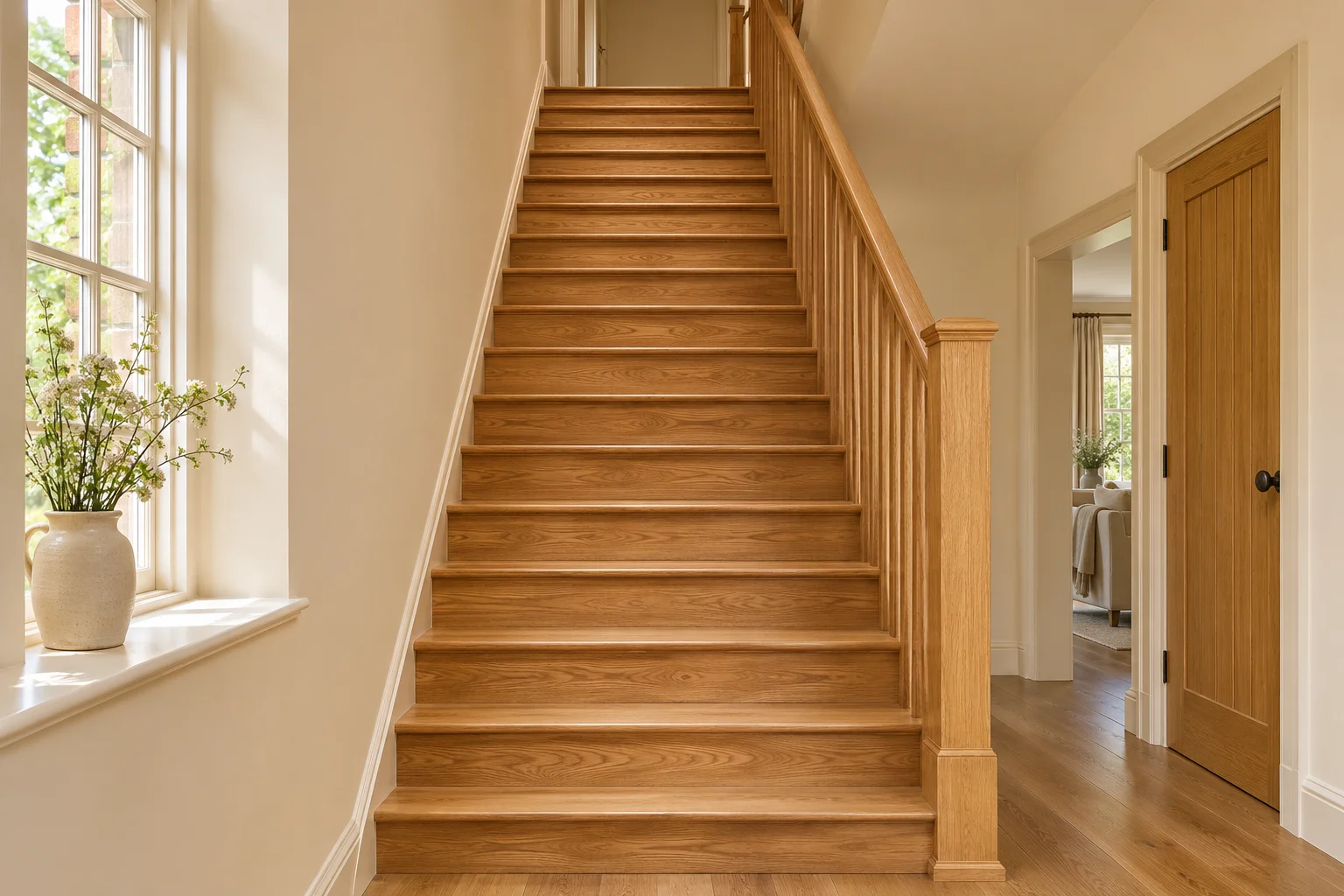
Wood Railings
A wood railing can change the feel of a staircase without changing its layout. The result depends on how the handrail, newels, balusters and landing details work together, especially if some existing parts will stay.
Architectural design illustrations shown for inspiration, not as a portfolio of completed work.
What do you want to see through the rail?
Timber balusters and decorative metal create a repeated pattern. Glass gives a broad transparent surface with visible edges and mounts. Cable creates fine horizontal lines but still needs a suitable frame and end connections.
Look at the complete flight and landing from both floors. Post sizes, joints and the connection at the stair head can change the effect as much as the infill material. Keep reference images that show those details rather than only a small sample panel.
A guard and a handrail do different jobs
A guard protects an open edge; a handrail provides a surface to grip. One assembly can do both when appropriately designed, but choosing an attractive top rail does not automatically settle the gripping requirements.
The intended building use and applicable rules matter. Access Board guidance for covered stairways should not be applied as a universal private-home specification. The actual project needs its own review.
Replacing existing railing
Find out whether existing posts, rails and fixings can remain. Changing infill may affect connections, old holes and finish repairs. Moving to a tensioned cable or glass system may require a different supporting arrangement rather than a simple swap.
Discuss your railing project. Include the city, indoor or outdoor setting, what is there now and what you hope to keep. A clear description of the stair and landing makes the comparison more useful.
Tell us about the project.
What are
you planning?
Start with your city, whether the work is a new build or remodel, and what you want to change. Mention any plans or photographs you already have; final measurements can follow.
Discuss Your Project