
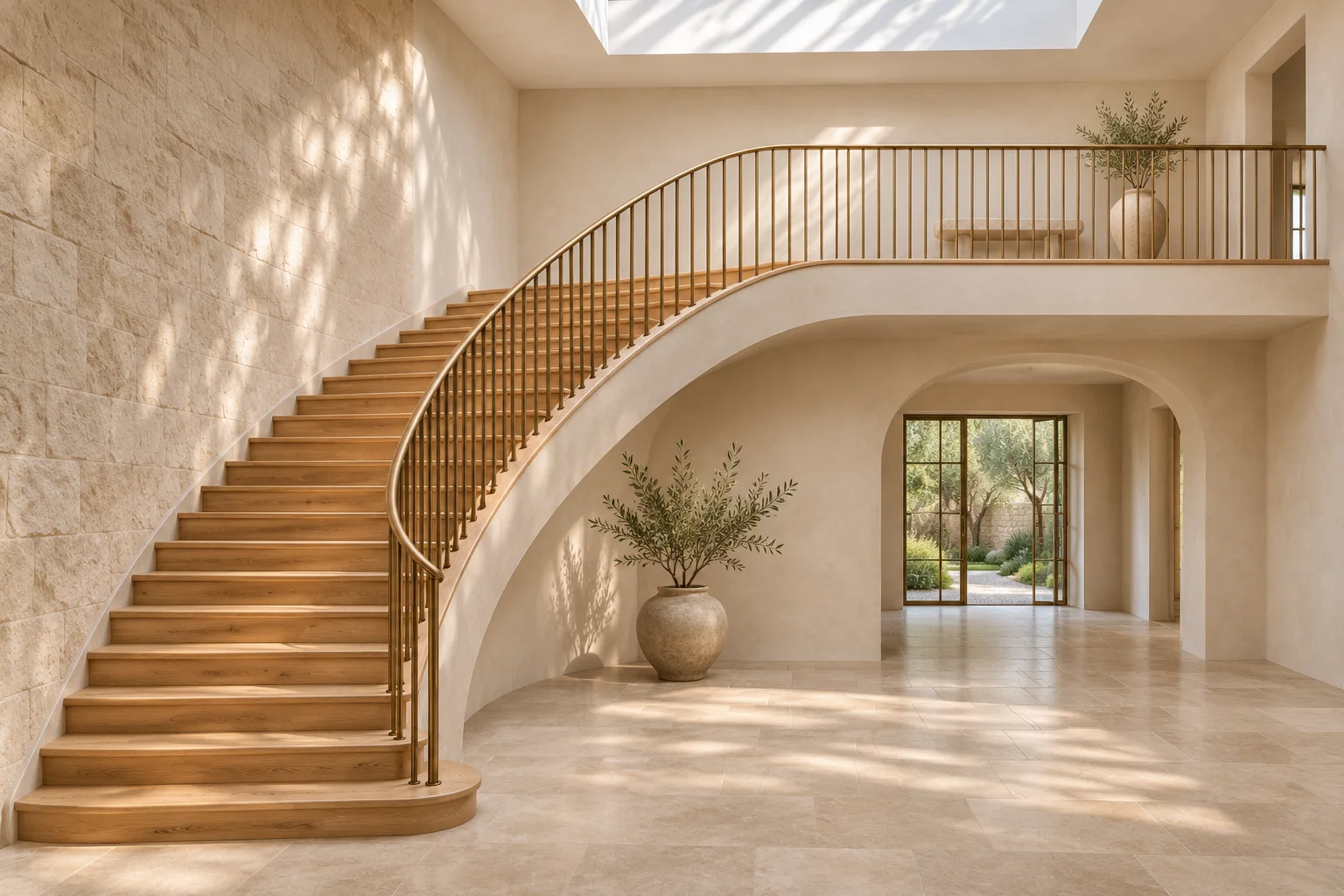
Use curved stair inspiration and other references to identify a clear idea, not a list of features to copy. A strong shape, selected material or well-resolved rail can make the stair distinctive while the room remains comfortable to use.
Look for a useful relationship with the room
The outline should work with the entrance and the upper arrival, not only with a front-facing view. Show nearby doors and furniture routes when assessing the size. A larger or more decorative stair is not automatically a better fit.
Choose where the eye should go first. If the curve is prominent, a restrained rail may let it remain clear. If the timber is the feature, compare grain and finish samples with the adjoining floor rather than adding another competing pattern.
Resolve the details that are easy to miss in a photograph
The handrail start, post base, landing connection and visible underside all affect the finished result. Ask to see those transitions in the relevant drawings. Physical samples establish appearance but do not establish support or geometry.
Keep the maintenance plan realistic: cleaning glass above a stairwell, reaching a light and repairing a worn coating should all be possible without guesswork. There is no guaranteed resale benefit from a statement stair. Its value to the project starts with the purpose it serves and the result actually specified.
-
Make a Statement with Your Stair Treads
Treads are the walking surfaces of a stair and can give the design much of its character. Compare material choices, edge detail and finish alongside the support system. Structural glass treads require a purpose-designed assembly, not a generic transparent panel.
-
Let Your Staircase Railing Steal the Show
A railing can define the stair's visual rhythm while providing its required protective and gripping functions. Compare the infill pattern, handrail shape, post positions and landing transitions as a complete composition.
-
Incorporate Unique Design Elements
One way to make your staircase stand out is by incorporating unique design elements. For example, you could add a custom-designed newel post, or incorporate intricate baluster designs. These design elements can add a touch of elegance and sophistication to your staircase, and they can be customized to match your personal style.
-
Don’t Forget the Lighting
Proper lighting is essential for any staircase. Not only does it provide safety, but it can also highlight the design elements of your staircase. Consider installing recessed lighting in the stair treads or adding a chandelier above the staircase for a dramatic effect.
-
Make Your Staircase Functional
Test the statement design against everyday tasks: approaching the first step, carrying items, using the handrail and moving through the landing. Built-in storage or decorative features should not compromise the required structure or clear circulation.
A statement staircase works best when its materials, railing and lighting support a practical route through the home. Compare the design against the available opening and everyday use; an impressive appearance does not guarantee a higher property value.
Share the feature you want to emphasize, the available space and any known constraints. Discuss a statement stair for your room without assuming a reference image is a construction drawing.