
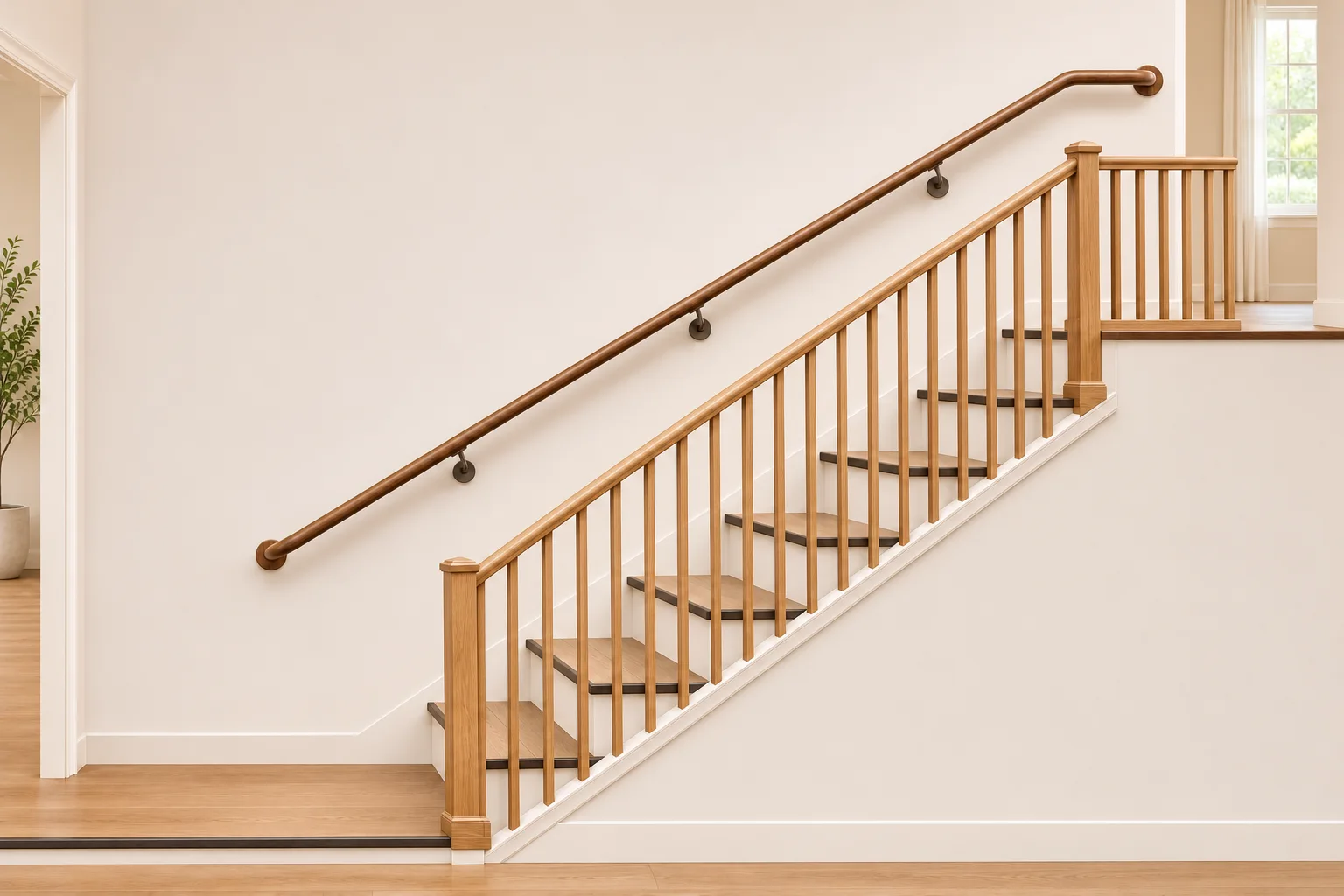
Check stair railings, treads, lighting and coverings together when assessing everyday use. A practical improvement starts with the actual concern and the people using the route, not a promise that one product prevents every accident.
Separate condition concerns from accessories
Moving posts, loose treads and damaged components need assessment. A new covering or coat of paint can hide the condition without fixing it. Have the underlying problem identified before spending on a cosmetic solution.
Look for items and loose edges in the walking route, and consider whether users can identify the next tread from both directions. A change that helps one issue should not create an obstruction or an unexpected surface transition elsewhere.
Use the right requirements and products
Handrail and guard requirements depend on the actual stair, building use and work. Additional gripping support may be worth discussing, but advice for covered public stairs should not be described as the universal rule for every private house.
Any gate, covering or fitting needs to suit its intended location and installation. Keep required circulation clear and consider the product instructions. For a larger change, include flooring thicknesses, landing transitions and access during work in the review rather than focusing only on the new accessory.
Keep Your Staircase Well-Lit
Proper lighting is crucial for staircase safety. Ensure that your staircase is well-lit, especially at night. Install bright and energy-efficient light fixtures to illuminate the entire staircase, including the treads and risers. Motion sensor lights can also be a smart addition to automatically light up the staircase when someone approaches.
Use Non-Slip Materials
Slippery stairs can lead to dangerous falls. Consider using non-slip materials on your staircase, such as non-slip treads or non-slip adhesive strips. These simple additions can provide extra traction and reduce the risk of accidents, especially on wooden or tile stairs.
Install Handrails
A suitable handrail provides gripping support along the stair. Discuss whether additional support would help the regular users, and establish the applicable requirements for the actual home or facility. Advice for covered public stairs is not a universal both-sides rule for every private house.
Secure Carpets and Rugs
Use coverings and fixings intended for stair use, installed according to their instructions. Keep edges secure and inspect for movement or wear; a product suitable for a loose floor rug is not automatically suitable for a stair.
Clear the Clutter
A cluttered staircase is an accident waiting to happen. Keep the staircase area clear of toys, shoes, books, or any other items that could obstruct the path. A clutter-free staircase not only looks better but is also safer for everyone.
Install Safety Gates
Select gates intended for their exact top- or bottom-of-stair location and follow the manufacturer's mounting instructions. Check the opening, fixings and the household's needs rather than assuming one gate type is suitable everywhere.
Educate Your Family
Staircase safety is a family affair. Educate everyone in your household, especially children, about the importance of stair safety. Teach them to hold the handrail, use the stairs one step at a time, and be cautious when going up or down.
Regular Maintenance
Perform regular maintenance on your staircase to ensure it remains in good condition. Check for loose or damaged steps, handrails, or balusters. Promptly repair any issues to prevent accidents.
Explain the concern and any known condition or mobility-related need. Discuss a specific stair improvement with the complete route considered.