
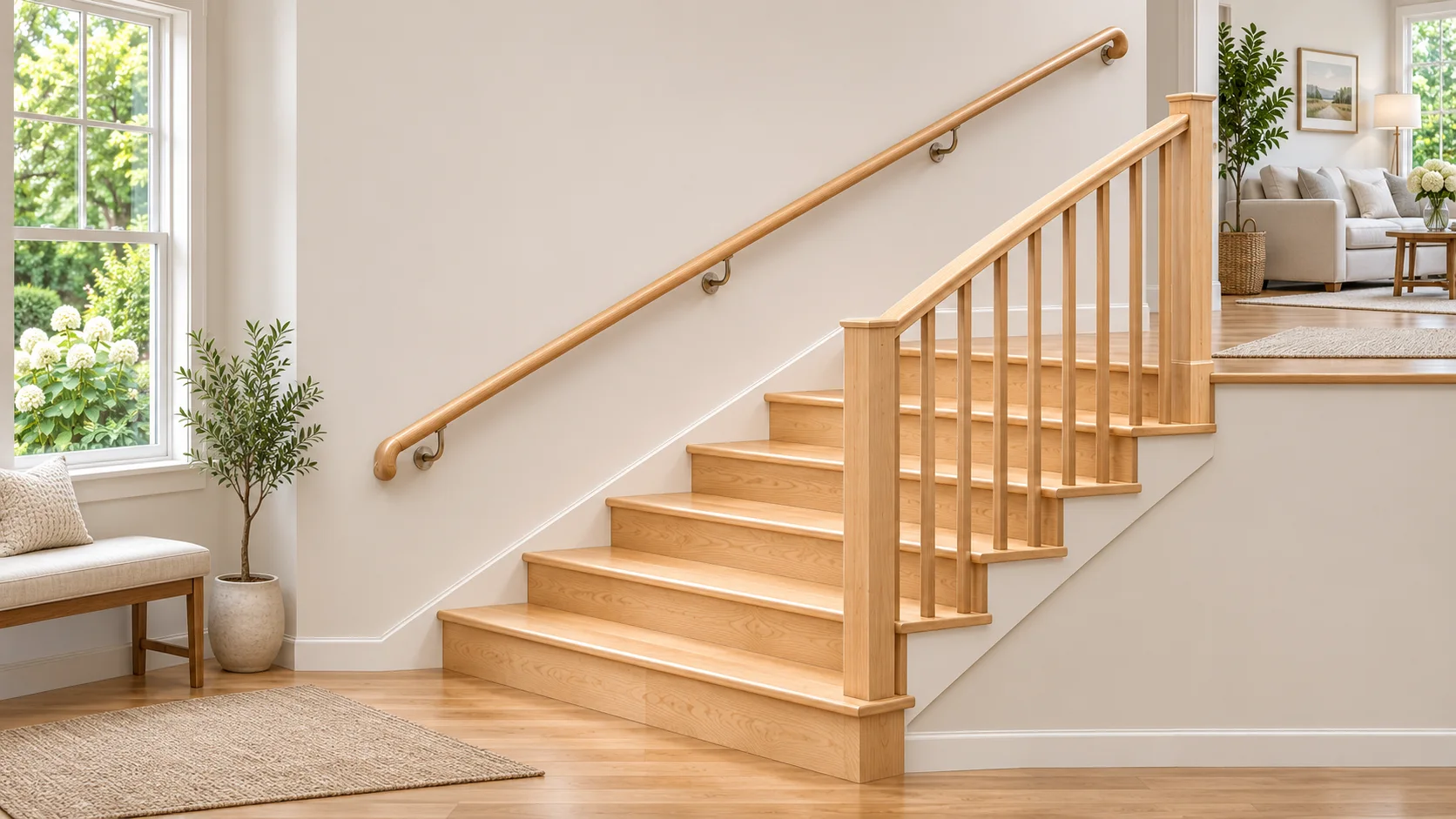
Review stair railing choices alongside tread condition, lighting and the way the stair is used. A useful upgrade addresses a specific problem; adding a product labeled safe does not establish that the existing flight or the new assembly is suitable.
Start with the concern, not the accessory
Is the handrail difficult to grip, is a tread edge hard to see, or is a covering loose? Those observations point to different work. Movement in posts or treads and damaged supports need assessment rather than being concealed by a cosmetic addition.
Consider every regular user, including anyone who needs more support or clearer visibility. Avoid assuming a decorative rail, brighter bulb or adhesive strip solves a wider mobility or layout issue. The route and the underlying stair still matter.
Check what an added product changes
A tread covering can change thickness and edge detail. A light can create glare. A gate or stored item can obstruct circulation. Use the product only in its intended location and follow its fitting instructions, with professional review where the stair or guarding is altered.
Keep the handrail, open-side guard and upper landing in the same review. For a home alteration, Utah’s residential amendments are part of the requirements to consider. A checklist of accessories is not an approval of the finished stair.
The Importance of Staircase Safety
Look for loose parts, worn coverings, poor visibility and objects in the walking route. Resolve defects before adding decorative features. An assessment should consider both the condition of the stair and the needs of its users.
Staircase Safety Features
Handrails: A Fundamental Element
Check that the handrail is secure, comfortable to grasp and usable along the route. Decorative trim and a guard's top edge are not automatically suitable substitutes. Review the complete arrangement with the person assessing the stair.
Anti-Slip Treads
Any added tread covering needs to be suitable for the surface and securely installed without creating a loose edge or an awkward change in step height. Ask for the product’s intended-use and care guidance; no surface treatment can promise to prevent every fall.
Childproofing Your Stairs
Choose safety gates intended for the exact stair location and follow their mounting instructions. Consider children, pets and other household members, and do not allow a gate or its fittings to obstruct the walking surface.
Adequate Lighting
Look for shadows that hide a tread edge, glare from exposed light sources and controls that are hard to reach when entering the stair. A combination of general and well-positioned local light may be more useful than simply installing a brighter fixture.
Emergency Preparedness
Keep the stair and landings clear and coordinate them with the building's escape arrangements. Fire protection and enclosure requirements depend on the building and its use; a decorative material choice alone does not establish compliance.
Explain the concern and any planned flooring or railing changes. Discuss a stair improvement project; do not remove supports or guards to investigate it yourself.