
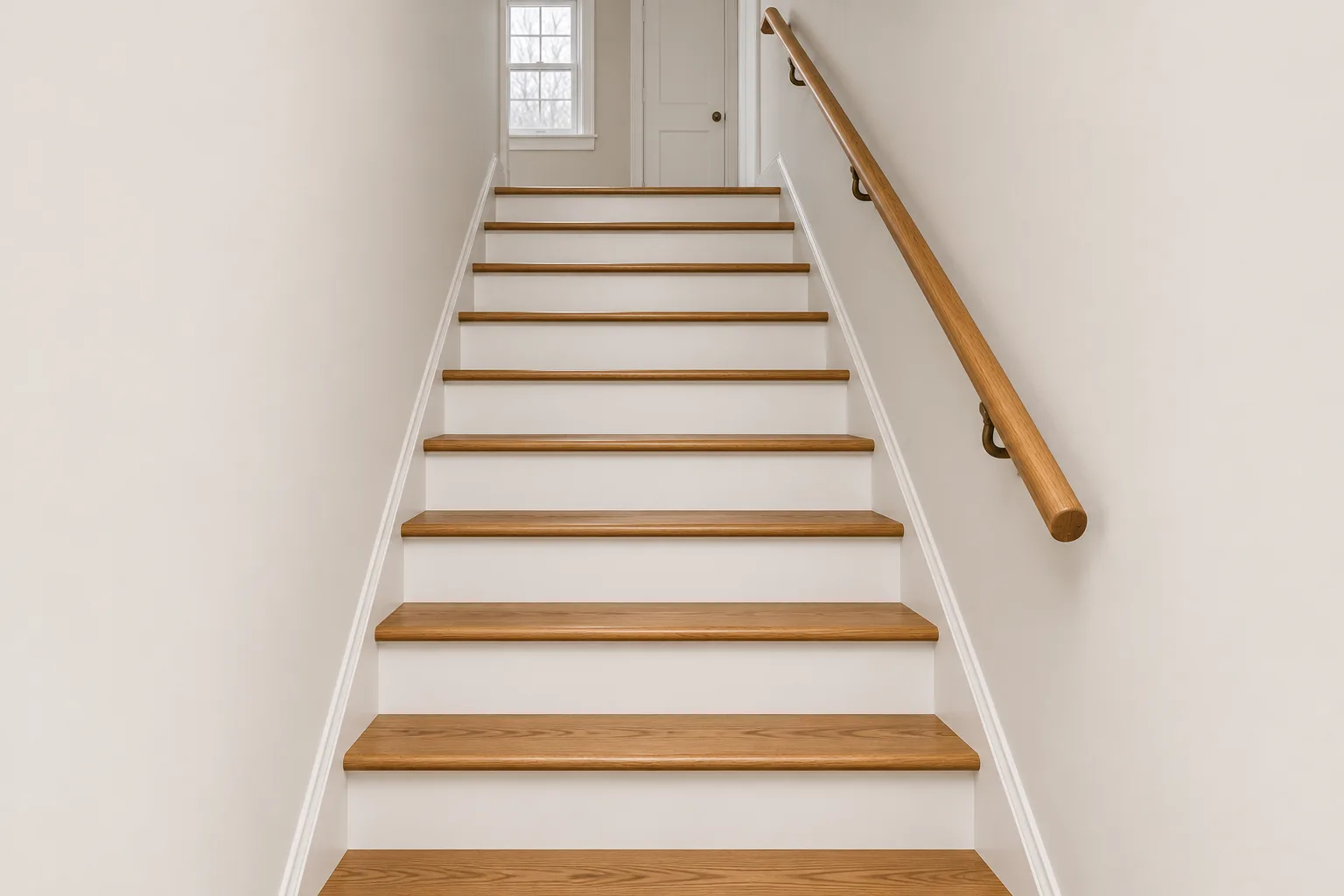
A staircase remodel budget is more useful when it separates the scopes being compared. Refinishing suitable parts, replacing a railing and rebuilding the flight involve different work. A lower material price does not establish the lowest completed-project cost.
Define the result before comparing prices
List the visible changes and the parts that will remain. Then include removal, disposal, repairs, finish work and protection. If the opening, support or stair route changes, identify the design and approval work as a separate part of the package.
For new coverings, use products intended for stairs with compatible nosings, attachment and care instructions. Ordinary flooring is not automatically a suitable stair assembly. Added thickness needs to be included in the finished-geometry review at both landings.
Put DIY decisions on a real scope boundary
Confidence is not a test of structural or electrical competence. Changing guards, supports, stair geometry or fixed wiring needs the appropriate professional assessment. Even coating work involves existing-finish compatibility, dust, curing and access questions.
EPA’s lead-safe renovation guidance explains the risk of dangerous dust when lead-based paint is disturbed in older housing. Establish the actual condition before sanding painted components. Do not choose a cheaper method by ignoring the risks and work it leaves out.
Introduction
A useful budget starts with the problem you want to solve and the parts that can remain. Compare a focused repair or finish update with more extensive replacement using the same complete scope, including adjacent repairs and access during work.
Assessing Your Staircase
Before embarking on your staircase makeover journey, it’s crucial to assess the current state of your stairs. Take a close look at the materials, condition, and overall structure. Determine whether a complete replacement or a renovation is necessary. By evaluating the existing staircase, you can make informed decisions regarding the design, materials, and budget for your project.
Choosing the Right Design
The design of your staircase sets the tone for your home’s interior. There are various design options to consider, from classic and timeless to modern and contemporary. Some popular staircase designs include:
- Straight Stairs: Simple and sleek, straight stairs are a popular choice for their versatility and space-saving features.
- Curved Stairs: Add elegance and a touch of grandeur with a gracefully curved staircase, perfect for larger homes.
- Spiral Stairs: Ideal for compact spaces, spiral stairs provide a unique and stylish focal point.
- Floating forms rely on a designed support system and are not simply a cosmetic upgrade. A separate option is to change the shape of the lower entrance steps with a flared stair layout; assess that scope before budgeting for finishes.
Carefully consider your home’s overall style and your personal preferences when selecting a staircase design that suits your taste and budget.
Budget-Friendly Materials
Transforming your stairs on a budget doesn’t mean compromising on quality and style. There are several budget-friendly materials available that can give your staircase a fresh and updated look. Consider the following options:
- Laminate: Laminate flooring offers a cost-effective alternative to hardwood, mimicking the look of natural wood without the hefty price tag.
- Vinyl: Vinyl is a durable and affordable material that comes in various designs, including wood and stone finishes.
- Paint: A fresh coat of paint can work wonders for your staircase. Choose a color that complements your home’s interior and expresses your personal style.
- Carpet: Opting for carpeted stairs can provide warmth, comfort, and noise reduction. Look for durable and stain-resistant carpeting options.
By exploring these budget-friendly materials, you can find the perfect solution to transform your stairs without breaking the bank.
DIY vs. Professional Installation
Define the task before deciding who should do it. Guards, supports, stair geometry and fixed electrical work need the appropriate professional assessment. Coating work also requires existing-finish identification, safe preparation, curing and an access plan; confidence alone is not a scope boundary.
Maintenance Tips
After completing your staircase makeover, it’s important to maintain its beauty and functionality. Here are some maintenance tips to prolong the lifespan and appearance of your revamped stairs:
- Regular Cleaning: Sweep or vacuum your stairs regularly to remove dust and debris. Wipe them down with a damp cloth to maintain their shine.
- Choose a finish compatible with the existing timber and intended for stair treads. Follow preparation and curing instructions, and consider traction rather than selecting a coating only for its sheen.
- Address Issues Promptly: Have movement, damaged parts and suspected connection problems assessed. Do not conceal the issue with a new covering or assume a cosmetic repair resolves its cause.
By following these maintenance tips, you can enjoy your beautifully transformed staircase for years to come.
Common questions
- FAQ 1: How much does a staircase makeover cost?
The cost depends on what changes: cleaning and finish repairs, replacing the railing, renewing treads or altering the structure. Separate these scopes and compare itemized proposals rather than treating every makeover as the same job.
- FAQ 2: Can I transform my stairs without replacing them?
Yes, it’s possible to transform your stairs without replacing them entirely. By updating the materials, applying a fresh coat of paint, or adding decorative elements, you can achieve a stunning transformation while saving on costs.
- FAQ 3: What are the most popular staircase design options?
Some popular staircase design options include straight stairs, curved stairs, spiral stairs, and floating stairs. Each design offers a unique aesthetic and can be customized to match your home’s interior style.
- FAQ 4: Are there any safety considerations for staircase makeovers?
Have the actual alteration and finished geometry reviewed against applicable requirements. Use products intended for stairs with compatible edges, fixing and care, and plan access during work. A surface label or coating alone does not prevent every fall.
- FAQ 5: Should I hire a professional for my staircase makeover?
Cosmetic product selection is different from work on supports, treads, guarding or electrical systems. Have movement, damage and proposed alterations assessed by the appropriate professional before covering them with new finishes.
Conclusion
Transforming your stairs on a budget is an exciting and rewarding endeavor. By assessing your current staircase, choosing the right design, exploring budget-friendly materials, and considering professional installation, you can achieve remarkable results without breaking the bank. Remember to prioritize safety and maintenance to ensure the longevity and beauty of your newly transformed staircase.
Describe the current condition, desired change and any budget priority. Discuss a clearly scoped stair makeover and compare suitable alternatives.