
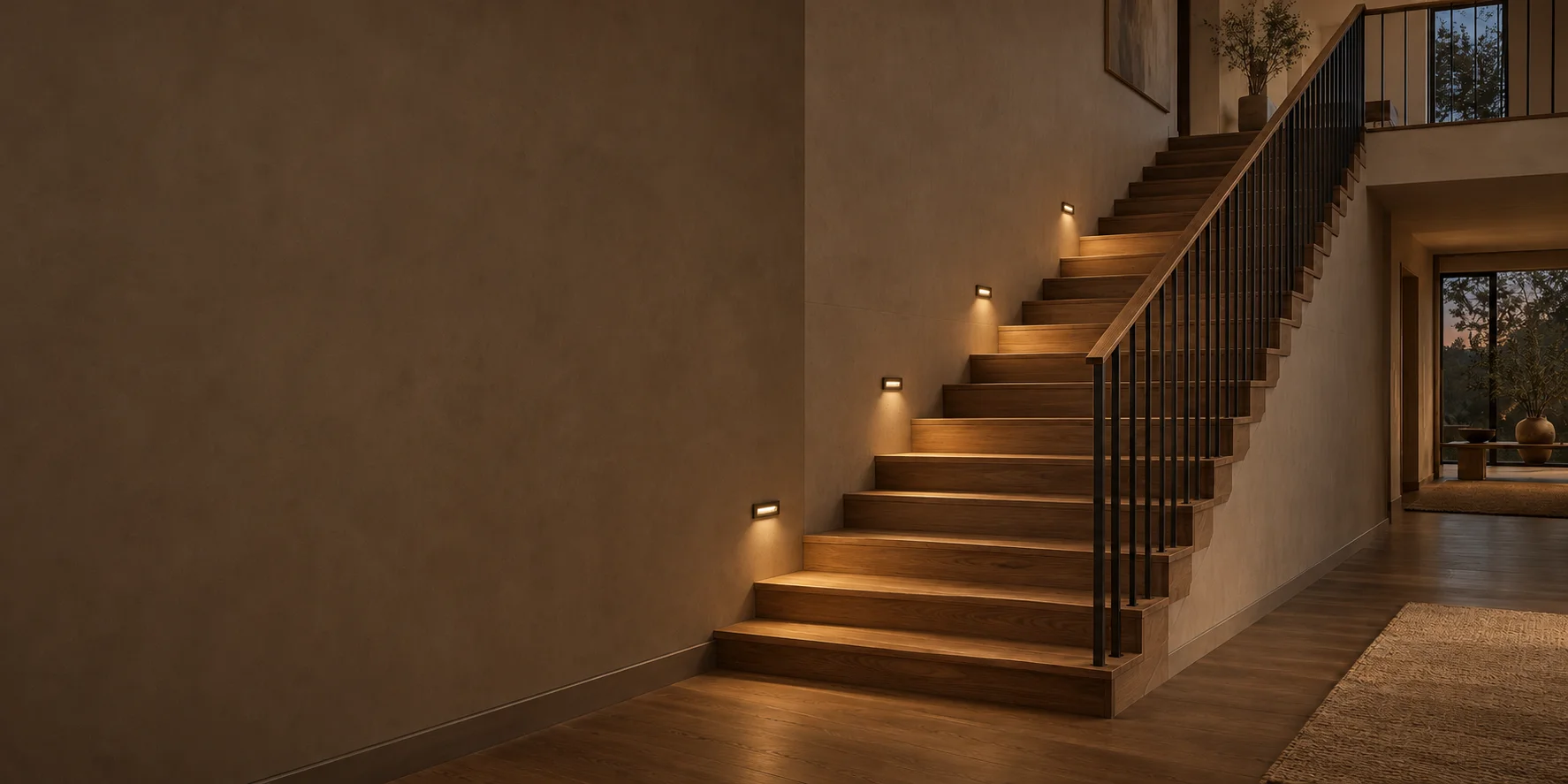
In a remodel, stair lighting is easier to plan when each source has a clear job. General light, useful illumination of the route and decorative accents can work together, but adding more fittings is not automatically a better result.
Give each layer a purpose
Ambient light helps describe the wider room. Light directed at the route can help make tread edges and landings visible. Accent light emphasizes a feature such as a wall, rail or underside. One fitting may contribute to more than one job, but a decorative glow should not be assumed to cover the walking surface.
Check the effect from the top and bottom, including when daylight is absent. Shadows, reflections and an exposed source at eye level can remain even when the space appears bright overall.
Choose controls with the actual fixtures
Discuss dimming, switching locations and any proposed sensors with the electrical professional. Compatibility and behavior matter more than a smart label. Users should be able to identify the route before entering it.
Keep replacement and cleaning access in the design. Fixed wiring and recesses in stair components need the appropriate assessment; a general inspiration article is not an installation instruction. Review the final effect with the actual tread, wall and rail finishes before treating the placement as settled.
Why Staircase Lighting Matters
Useful stair lighting makes the walking route and landings easier to identify. Placement, distribution, glare, shadows and control locations need review with the actual surfaces. More fittings or a brighter source do not automatically resolve every visibility problem.
Types of Staircase Lighting
There are several types of staircase lighting to choose from, each offering its unique benefits and aesthetic appeal. Let’s explore some popular options:
3.1. Wall Sconces
Wall sconces are fixtures mounted on the walls adjacent to the staircase. They provide indirect lighting, casting a gentle glow that illuminates the stairs while creating a visually appealing effect. Wall sconces come in various designs and styles, allowing you to choose a look that complements your home decor.
3.2. Recessed Lighting
Recessed lighting involves installing light fixtures into the ceiling, aimed at illuminating the staircase from above. This type of lighting creates a sleek and modern look, as the fixtures remain hidden within the ceiling, with only the light beams visible. Recessed lighting offers a seamless integration into any architectural style.
3.3. Step Lights
Step lights may be recessed or surface-mounted where the product and stair design allow. Review the actual light distribution and any proposed alteration to a component. Their presence alone does not establish suitable visibility; the electrical and stair details need coordination.
3.4. Under Tread Lighting
Under tread lighting involves installing LED strips or fixtures underneath the tread of each step. This creates a striking visual effect, with the light emanating from beneath the stairs. Check whether the actual effect reveals the walking surface and edges or mainly illuminates the underside. Combine it with the wider lighting plan rather than assuming the accent is sufficient.
3.5. Pendant Lights
Pendant lights are suspended from the ceiling and can be an attractive lighting option for staircases. They provide both ambient and task lighting, creating a focal point and enhancing the overall aesthetic appeal of your staircase. Pendant lights come in various shapes, sizes, and materials, allowing you to choose a design that suits your style.
Choosing the Right Lighting for Your Staircase
When selecting the right lighting for your staircase, consider the following factors:
- Safety: Review useful light distribution, tread visibility, shadows, glare and controls from both ends. Brightness alone does not settle whether the installation works well.
- Style: Choose lighting options that complement your interior design and architectural style.
- Energy Efficiency: Opt for energy-efficient lighting, such as LED fixtures, to reduce energy consumption and lower utility bills.
- Maintenance: Consider the ease of maintenance and bulb replacement when selecting lighting fixtures.
- Installation: Determine the feasibility of installation based on the layout and structure of your staircase.
Installation Considerations
Proper installation of staircase lighting is crucial to ensure its effectiveness and longevity. Here are a few essential considerations:
- Electrical Wiring: Have fixed electrical work handled by the appropriate qualified professional, with applicable licensing, approvals and inspections established for the project. Coordinate it with the stair components before cutting or concealing anything.
- Placement: Position the lights strategically to provide adequate illumination on each step and minimize shadows.
- Light Switches: Install light switches at both the top and bottom of the staircase for convenient access and control.
- Dimmers: Consider incorporating dimmers to adjust the lighting intensity according to your preference and create different moods.
- Automation: Explore options for automated lighting control, such as motion sensors or smart home integration, for added convenience and energy efficiency.
By considering these installation factors, you can ensure that your staircase lighting system operates efficiently and seamlessly enhances the safety and ambiance of your home.
Common questions
- 6.1. How does staircase lighting enhance safety?
Properly lit staircases reduce the risk of accidents by providing clear visibility and minimizing shadows. Illuminated stairs enable individuals to navigate safely, particularly in low-light conditions or during nighttime.
- 6.2. Are LED lights a good option for staircase lighting?
Yes, LED lights are an excellent choice for staircase lighting. They are energy-efficient, have a long lifespan, and produce minimal heat. LED lights also offer flexibility in design and can be dimmed to create the desired ambiance.
- 6.3. Can I install staircase lighting myself?
While some lighting options may be suitable for DIY installation, it is generally recommended to hire a professional for staircase lighting installation. Professionals have the expertise to ensure proper electrical wiring, placement, and adherence to safety regulations.
- 6.4. How do I determine the appropriate brightness for staircase lighting?
The appropriate brightness for staircase lighting depends on various factors, including the size of the staircase, the level of ambient lighting in the surrounding area, and personal preference. A lighting professional can assess these factors and recommend the ideal brightness level for your specific staircase.
- 6.5. What are the benefits of hiring a professional for staircase lighting installation?
A suitable lighting or electrical professional can help define fixture placement, wiring, controls and service access. Confirm the actual responsibilities, qualifications and required approvals; hiring someone is not by itself proof that every project requirement has been met.
Conclusion
Choose lighting that reveals the walking surface without glare, then coordinate the fittings with the room's appearance. Discuss fixed electrical work, controls and access for maintenance with the appropriate qualified professional.
Plan any electrical work with an appropriately qualified professional. A lighting brief should explain the existing stair, available ambient light, preferred controls and access for wiring.
Explain what the current light misses and the effect you want to add. Discuss the lighting as part of the stair project, with practical visibility ahead of decorative claims.