
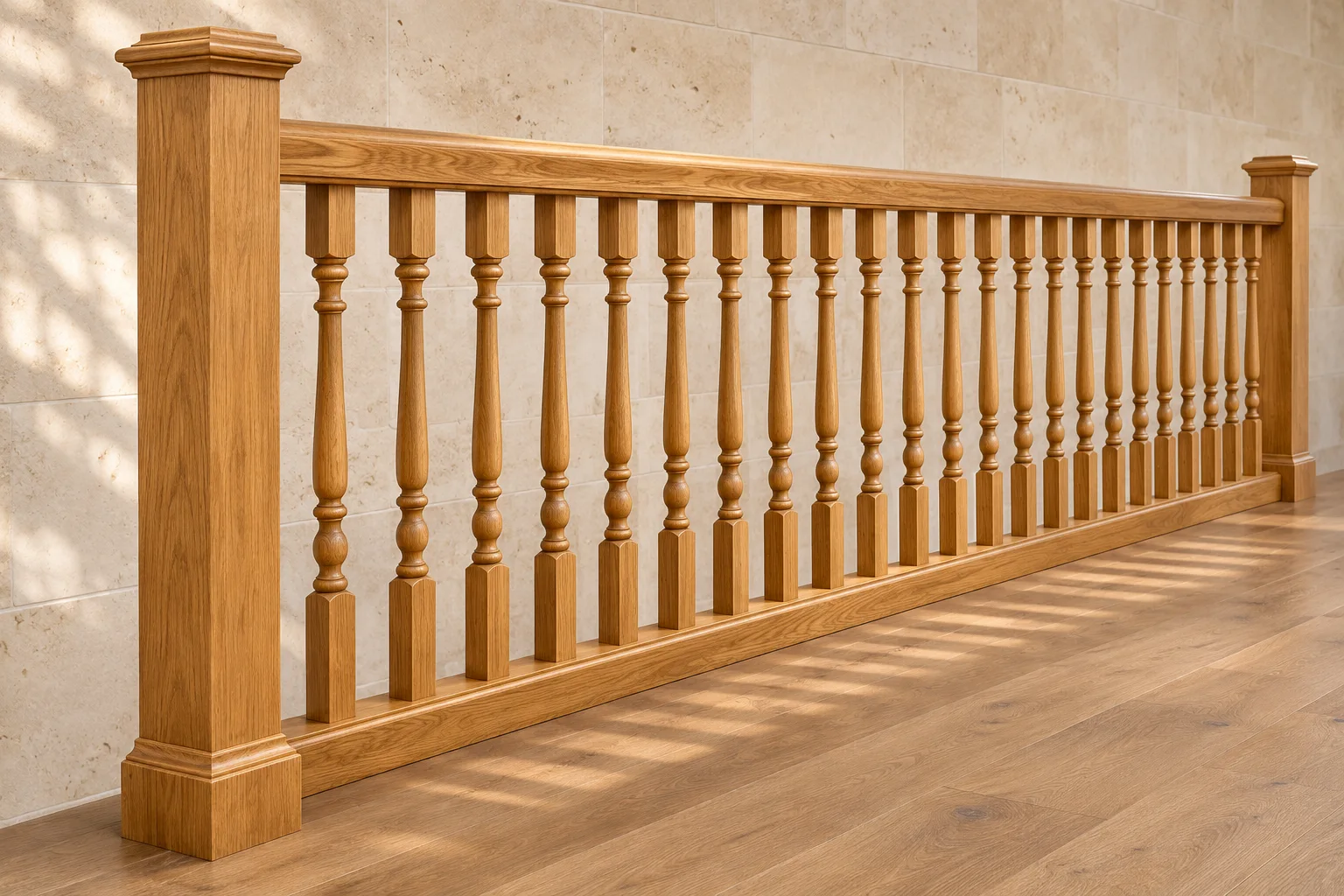
When comparing stair railings, start with the job each part does. The handrail gives gripping support, the guard protects an open edge, and the posts and infill complete the assembly. Appearance matters, but those functions need to stay clear.
One attractive part does not make a complete balustrade
Choosing a baluster pattern before the rail and posts can leave awkward proportions or connections. Look at the start, changes in direction and upper landing first. The arrangement must address every exposed edge, including the transition between the sloping run and level floor.
A wall rail and an open-side guard may both be needed in a design. Do not assume a wide decorative top rail is a suitable gripping surface. The building use and applicable requirements determine what the finished assembly needs to provide.
Review the drawing as well as the sample
The L.J. Smith anatomy guide illustrates rail, post and infill terminology. Use those names to discuss the actual stair rather than relying on a product photo with no connections shown.
For replacement work, ask which existing parts can remain and how old holes, post attachments and finish damage are handled. Cable and glass should be considered as specified systems, not automatic substitutes for the spindles in any timber rail. Keep the care and replacement information for the selected products.
The Safety Component
Handrails: The Backbone of Support
A guard helps protect an open edge; a handrail provides a surface to grip while using the stairs. One assembly may serve both roles, but its height, graspability and connections need to suit the actual project.
Balusters: More Than Just Spindles
Balusters form part of the barrier along an open stair or landing. Their arrangement, connections and relationship to the supporting posts matter alongside their appearance. A decorative pattern is not a substitute for checking the complete guard assembly.
Newel Posts: The Anchors of Elegance
Newel posts help define the start, end and changes in a railing. Their size and profile affect the appearance, but their connections to the actual structure need equal attention. A substantial-looking post is not proof of a sound fixing.
Aesthetic Enhancements
Materials Matter
Material choice changes the view and the maintenance needs of the guard. Timber gives a repeated grain and profile; metal can form finer patterns; glass changes the importance of panel edges and mounts. Resolve the handrail and landing transition with the infill.
Design Styles
Compare the infill rhythm with the stair treads and the room beyond. Closely patterned metalwork feels different from open glass panels or timber balusters. Keep the required protective function clear as the visual pattern changes.
Customization: Your Unique Touch
Personal details work best when they are resolved with the full railing. Review corner transitions, post positions, handrail joints and finish samples together rather than ordering decorative pieces independently.
Coordinate the complete railing
Choose the visual direction, then review the full assembly: guard, handrail, infill, posts and connections. A panel or baluster pattern that looks right still needs appropriate dimensions and support for its setting.
Mention the stair and landing runs, current rail and material direction in your inquiry. Discuss the complete balustrade, rather than only the piece that caught your eye.