
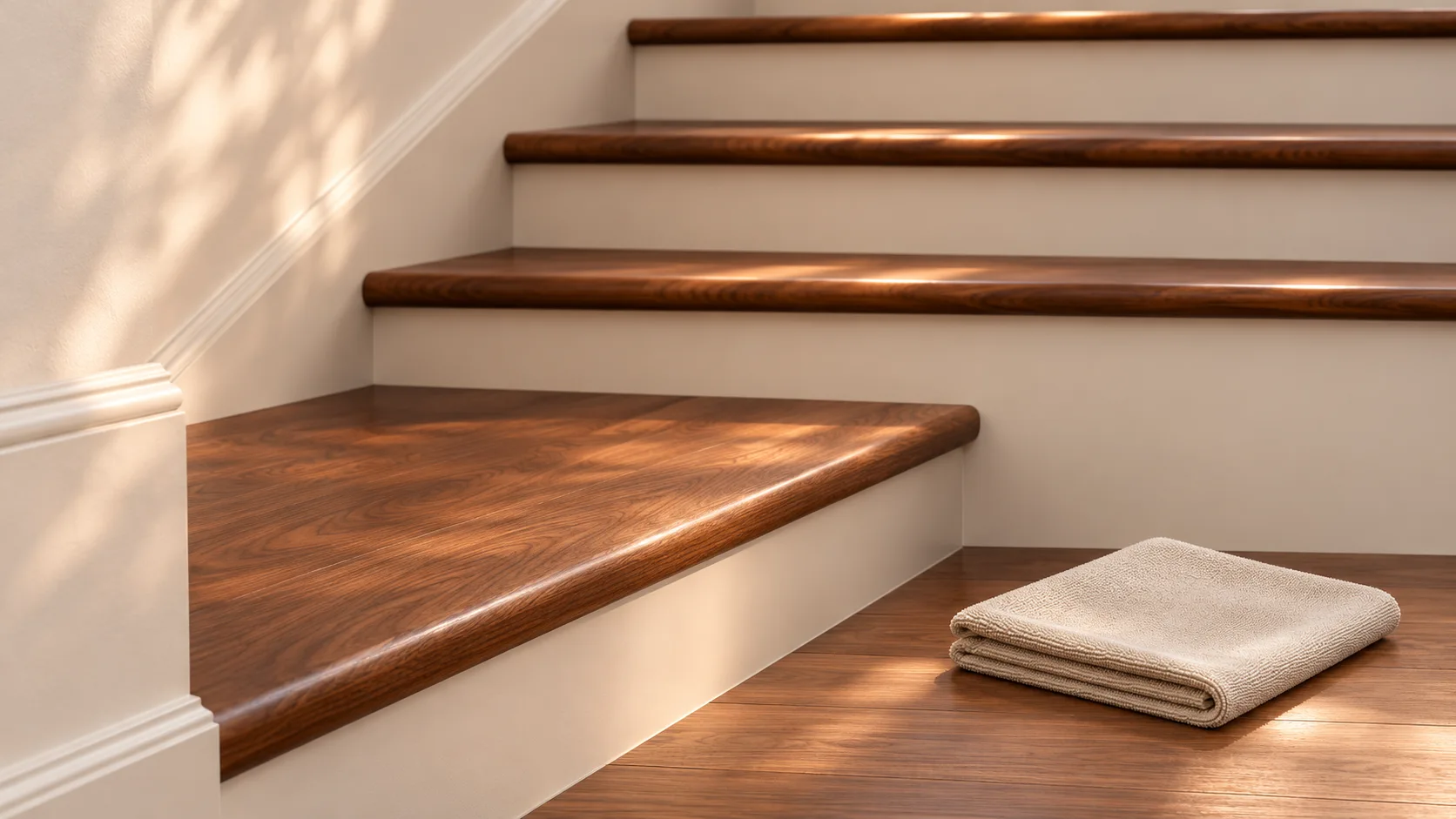
Care for stair materials according to the actual product and finish. Routine dust and marks are different from loose posts, movement or damaged treads. Good maintenance starts by recognizing which problem cleaning can solve and which needs assessment.
Keep the product information with the house records
Record timber species, coating, metal finish and any glass or cable system supplied. Care instructions for one coating or material may be unsuitable for another. Avoid choosing a cleaner solely because the broad material name matches the bottle.
Use physical condition as well as appearance to decide what needs attention. A scratched finish may need a supplier-approved repair; movement in a component may indicate a connection or support issue. Painting over the latter does not resolve it.
Match care to exposure and access
Exterior assemblies need care appropriate to water, debris and the actual surroundings. For example, Feeney’s stainless-steel guidance notes that its products are not maintenance-free and discusses contamination and harsh exposure. That is not a universal schedule for every metal rail.
Plan how high panels, lighting and the far side of a stairwell can be reached for cleaning. Do not lean over guarding or dismantle parts to reach a mark. If a repair is needed, identify who can service the specified system and retain its replacement information.
Why Maintenance Matters
Staircases endure daily foot traffic and can accumulate dirt, wear, and tear over time. Neglecting maintenance can lead to a decline in both appearance and safety. Here’s why maintenance matters:
- Preserving Aesthetics: Routine care can help preserve a suitable finish and make damage easier to notice. It does not prevent every change in appearance or establish a resale gain.
- Maintenance can reveal wear, loose parts and changes in condition. Suitability still depends on the stair, its users and the specific fault; no maintenance routine makes every stair appropriate for every person.
- Extending Lifespan: Regular maintenance can significantly extend the lifespan of your staircase, saving you money on costly replacements.
Cleaning Your Staircase
Dusting and Sweeping
Start by dusting your staircase regularly to prevent the buildup of dirt and debris. A soft-bristle brush or a microfiber cloth can help you reach corners and crevices. Follow up with a thorough sweep or vacuum to remove loose dirt and dust.
Gentle Cleaning Solutions
Use the care instructions for the actual surface and coating. Timber and laminate products can have moisture limits, while metal coatings and glass systems can require different cleaners. Do not assume one soap mixture or glass cleaner is suitable for all of them.
Tackling Stains
Address stains promptly. Blot spills with a clean cloth and mild detergent. For tougher stains, consult your staircase’s manufacturer or a professional cleaner for guidance.
Maintaining the Structural Integrity
Tightening Hardware
Check for movement or damage in rails, posts and brackets. Only carry out identified maintenance covered by the product instructions; a loose assembly may involve damaged anchors or hidden supports. Arrange assessment rather than assuming tightening resolves the cause.
Checking for Damage
Look for cracks, splinters, or signs of damage on wooden stairs. Metal stairs should be inspected for rust. Address any issues promptly to prevent further deterioration.
Lubricating Moving Parts
If your staircase has moving parts, like a retractable handrail, lubricate them according to the manufacturer’s recommendations to ensure smooth operation.
Protective Measures
Using Runners or Mats
Use only stair-suitable coverings secured for that application. Loose mats can move or catch a foot. Keep the tread edges visible and check that the covering and its fixings do not interfere with the walking surface.
Applying Finish
Wooden stairs may benefit from periodic refinishing or resealing to maintain their luster and protection against wear.
Seasonal Maintenance
Winter Care
During winter, be mindful of salt and ice melt products that can damage stair surfaces. Promptly remove snow and use salt alternatives to protect your staircase.
Spring Cleaning
Spring is an excellent time for a thorough cleaning and inspection of your staircase after the harsh winter months.
Common questions
- How often should I clean my staircase?
Regular dusting and sweeping should be done weekly, with a deeper cleaning every few months or as needed.
- Can I use any cleaning products on my staircase?
It’s best to stick to mild, non-abrasive cleaning solutions to avoid damage to the finish.
- What should I do if I notice structural issues with my staircase?
Contact a professional for a thorough inspection and necessary repairs.
- Are there any specific maintenance tips for different staircase materials?
Yes, the type of staircase material will influence maintenance requirements. Consult your staircase manufacturer or installer for specific care instructions.
- Who should assess loose or damaged stair components?
Have movement, loose handrails, damaged treads or unstable balusters assessed by a qualified professional. Avoid using the affected stair when its condition makes normal access unsafe; cleaning or cosmetic repair is not a substitute for that assessment.
If the project involves worn or damaged parts rather than routine cleaning, describe the condition and location. Discuss a stair or railing repair scope before selecting a cosmetic treatment.