
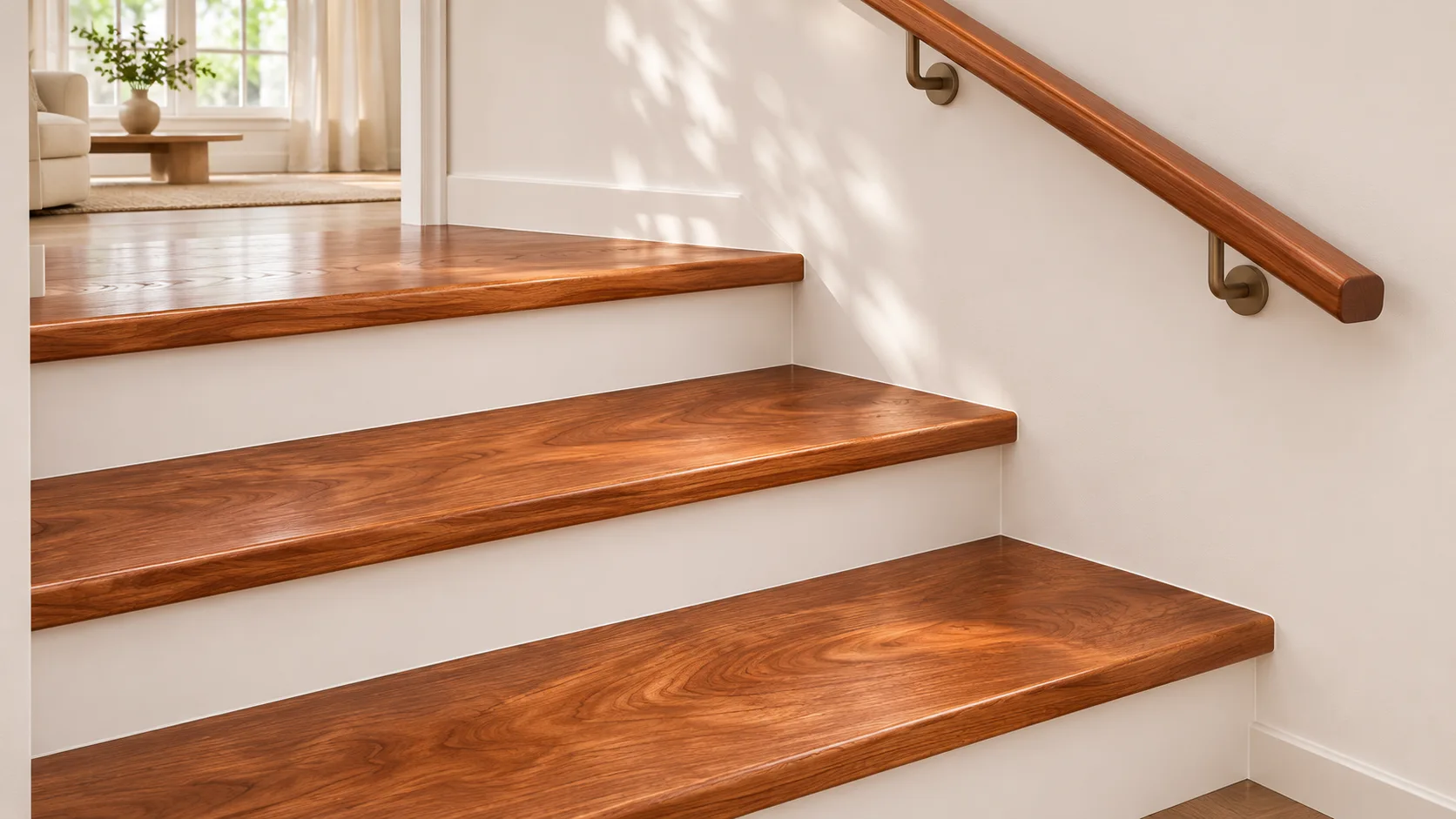
Timber treads and wood railings need care suited to their actual coating. Routine cleaning, a worn finish and movement in a component are different issues. Start with the product information rather than a universal polishing or resealing routine.
Find out what is on the wood
Identify the coating and its care instructions before adding cleaners, polish or another finish. A product suitable for one system can be inappropriate for another. Keep a record of the supplied stain, coating and repair process for future use.
The USDA Wood Handbook chapter on finishing discusses wood’s response to moisture and the role of coatings. A protective finish does not turn timber into an unchanging material, and a dark color does not indicate a particular level of protection.
Separate surface wear from a connection problem
Scratches or worn coating may call for a supplier-approved treatment. Loose newels, moving treads or damaged joints need assessment before refinishing. Do not use paint, filler or a new covering to disguise movement that has not been resolved.
Avoid assumptions about a fixed annual maintenance schedule. Exposure, traffic and the specific finish matter. Ask how a small damaged area can be repaired and when a larger refinish would be appropriate, then follow the actual product guidance.
Regular Cleaning
Regular cleaning is the first step to maintaining your wooden staircase. Dust and dirt can accumulate on the surface, dulling its finish over time. Use a soft, dry cloth or a vacuum cleaner with a brush attachment to remove dust and debris. Avoid using abrasive materials that can scratch the wood.
Gentle Washing
For a more thorough cleaning, use a damp, lint-free cloth or a microfiber mop. Be sure not to soak the wood, as excessive moisture can cause damage. If you need to use a cleaning solution, opt for a mild wood cleaner that is specifically designed for wooden surfaces. Always follow the manufacturer’s instructions for cleaning products.
Inspect for Damage
Regularly inspect your wooden staircase for signs of wear and tear. Check for loose or squeaky steps, loose handrails, or any damaged or splintered wood. Have movement, damaged parts and loose connections assessed promptly. Do not treat a new finish as a repair of the underlying condition.
Preventive Measures
Prevention is key to maintaining the quality of your wooden staircase. Place mats or rugs at the base of the staircase to prevent dirt and debris from being tracked onto the steps. Additionally, consider adding protective pads or felt strips to the bottoms of furniture that comes in contact with the staircase to prevent scratches and scuffs.
Refinishing
Refinishing requires identification of the existing coating, appropriate preparation and a compatible new finish. Disturbing older painted components can create hazardous dust; EPA’s lead-safe renovation guidance explains the concern. Plan containment, curing and alternative access with the relevant professional rather than choosing sanding as a default DIY task.
Protect from Sunlight
Direct sunlight can cause wood to fade and lose its luster over time. If your staircase is near a window, consider using window treatments like blinds or curtains to protect the wood from prolonged exposure to sunlight. This simple step can help preserve the color and finish of your staircase.
Professional Inspection
Periodically, it’s a good idea to have your wooden staircase professionally inspected. A professional can assess the structural integrity of the staircase and identify any hidden issues that may need attention. They can also recommend the best course of action for any necessary repairs or maintenance.
If your project involves repair or refinishing rather than routine care, describe the condition and any known coating. Discuss the wood-stair work needed before applying another product.