
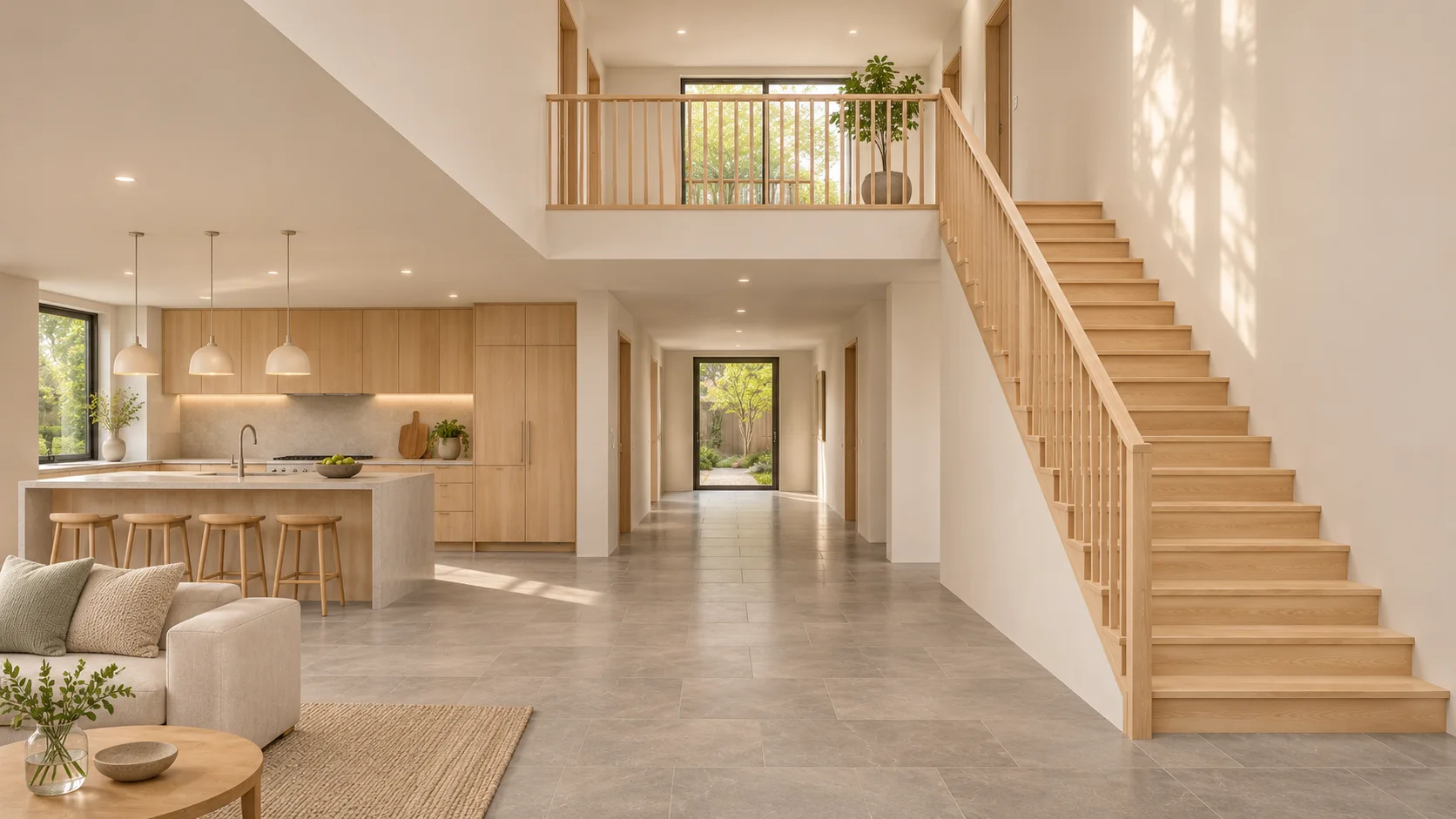
The most successful choice among stair types fits both the room and the route through it. The opening, arrival space, furniture access and needs of regular users should help decide the design before the decorative details are settled.
Test the ordinary trips
Think about carrying laundry, moving a mattress and meeting someone coming the other way. Add nearby doors and furniture to the plan. Those everyday situations reveal different constraints from a photograph of an empty entrance.
Look at the lower approach and upper arrival together. A broad first tread does not compensate for an awkward landing, and a compact footprint does not describe the ease of using a spiral. Compare the complete route.
Make the visible choices support the plan
A lighter-looking guard can open the view without changing the flight. A different finish may connect the stair with the adjoining floor. Those options can be useful where the existing layout works and major structural change would not address the real priority.
If the route itself needs changing, establish support, headroom and opening requirements first. In a new build, coordinate the final floor thicknesses before dimensions are accepted. In a remodel, identify what needs repair before new material conceals it. The remodel scope guide helps separate these decisions.
The Aesthetic Appeal of Stairs
Stairs are not merely functional; they are also a canvas for artistic expression. Here are some ways in which stairs contribute to the overall aesthetic of your home:
Architectural Focal Point
Staircases often serve as the centerpiece of a home’s design. Their size, shape, and location can make a bold statement, drawing the eye and adding a sense of grandeur to your space.
Design Versatility
Stairs offer endless design possibilities. Whether you prefer a classic, traditional look or a sleek, modern design, your staircase can be customized to reflect your unique style.
Material Selection
The choice of materials for your stairs can greatly impact their visual appeal. From the warmth of wood to the contemporary allure of glass and metal, the right materials can transform your staircase into a work of art.
Balusters and Railings
Balusters and railings are not just for safety; they also provide an opportunity to introduce intricate designs and patterns that enhance the overall aesthetics of your stairs.
The Functional Aspect of Stairs
While aesthetics are essential, stairs must also fulfill their primary function: providing safe and efficient access between levels. Here’s how they contribute to the functionality of your home:
Space Optimization
Staircases are designed to make the most of the available space. Whether it’s a compact spiral staircase or a grand, sweeping design, stairs can be tailored to fit your home’s layout.
Safety and Accessibility
Stairs must meet safety standards to ensure the well-being of your family. Handrails, balusters, and proper dimensions are crucial to prevent accidents.
Connecting Spaces
Stairs act as connectors, seamlessly linking different areas of your home. They enable easy access to bedrooms, living rooms, and other essential spaces.
Storage Solutions
Under-stair storage is a clever way to maximize space. Customized storage solutions can turn the area under your stairs into a functional and organized space.
The Perfect Stairs for Your Home
A useful staircase connects its appearance with everyday movement. Consider furniture access, landing space, handrail feel and the view from adjoining rooms alongside the materials and decorative details.
Explain how the stair is used now and what you want to improve. Share the layout and everyday-use priorities rather than selecting from appearance alone.