
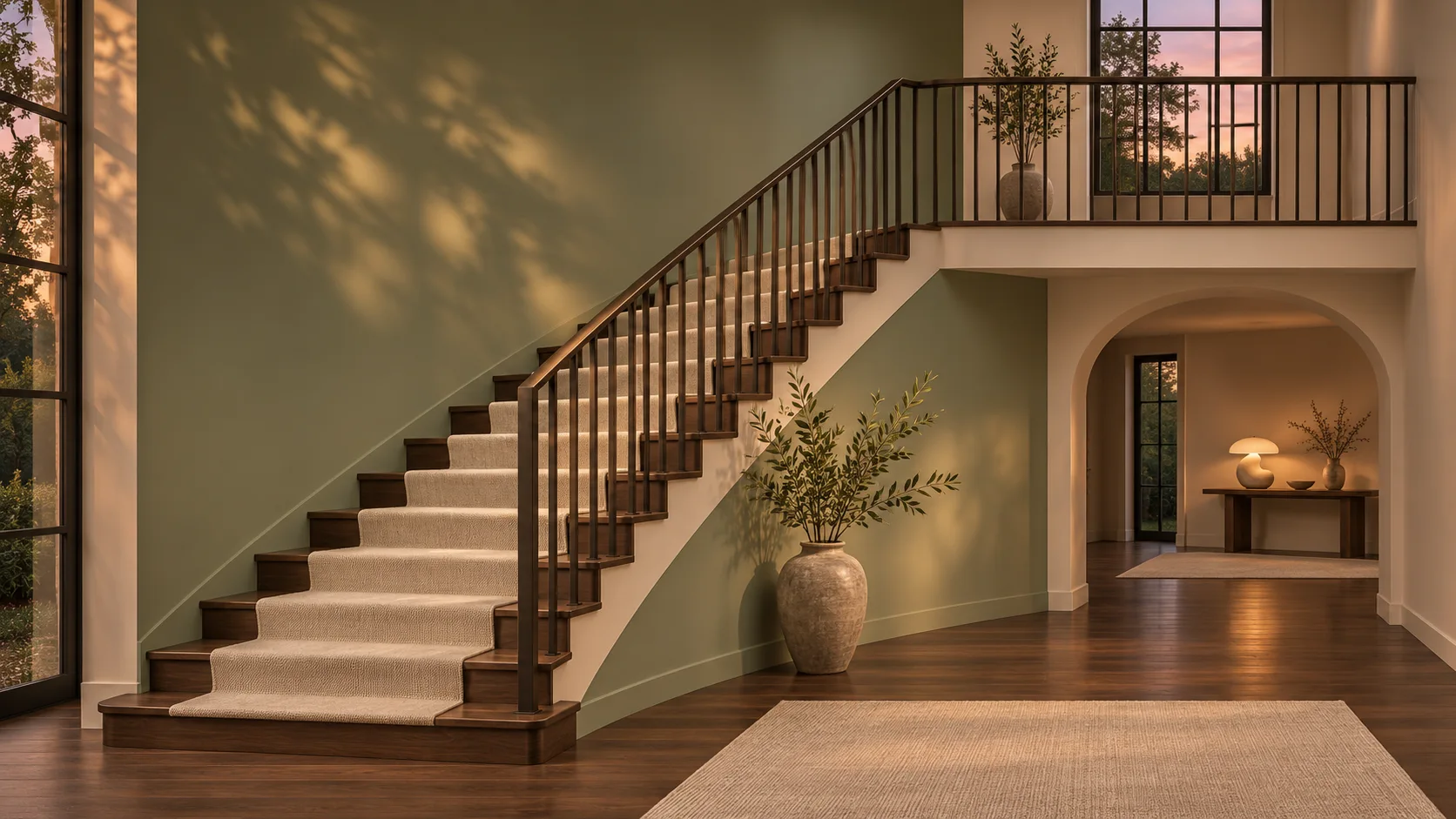
Compare staircase materials, rail patterns and lighting after identifying the route and parts you expect to retain. A useful design idea has both an appearance and a construction scope; the image usually shows only the first.
Identify what each idea actually changes
A different infill pattern can alter the view without moving the flight. A tread finish can change the color but also affect thickness and edge detail. A floating appearance may require a different structural system. Keep those scopes separate when deciding which idea is practical.
Choose a small number of details to lead the room. The wood tone, rail line, light or visible support can carry the design without making every component decorative. Review the complete stair and landing rather than a collection of unrelated samples.
Keep the specification behind the appearance
Balusters are infill members, not a universal explanation of how the rail is supported. Glass panels need a specified support and glazing system. Timber and metal finishes need suitable product and care information. No material label establishes the performance of the whole assembly.
Ask what the proposal includes and which adjacent surfaces need repair. Choose around use, condition and fit rather than assuming a particular increase in resale value. The materials guide helps distinguish the component roles.
1. Add Unique Lighting
One way to make your staircase stand out is to incorporate unique lighting elements. Whether it’s LED strip lights under each step or a statement pendant light above the landing, lighting can add a dramatic effect to your staircase. Not only does it highlight the beauty of your stairs, but it also provides a practical safety feature.
2. Install Decorative Balusters
Balusters or spindles are infill members within a guard; they are not a universal explanation of how its handrail is supported. Their endpoints and connections depend on the assembly. Glass panels are a different infill system requiring appropriate glazing and supports, not simply decorative spindle replacements.
3. Incorporate Colorful Accents
Adding pops of color to your staircase can create a bold and unique look. You can incorporate color in a variety of ways, such as painting the handrail or balusters, adding a colorful rug or runner, or even painting the risers. This is a great option.
4. Use Eye-catching Materials
Compare the visible grain, color and sheen of wood with the line of metal or transparency of glass guards. Decide how each material will be used and maintained, rather than choosing it only from a photograph.
5. Consider Custom Design Features
Choose one or two details that suit the room, such as a shaped newel, a distinctive handrail or a contrasting tread finish. Resolve their junctions and practical use rather than adding many unrelated decorative features.
Common questions
- What are the benefits of upgrading my staircase?
A well-defined update can address condition, use or appearance in the room. Any resale result is uncertain and depends on the property and market. Compare the benefit you need with the full scope rather than assuming a guaranteed value increase.
- How much does a custom staircase cost?
A custom stair budget depends on the layout, supports, material specification, fabrication, finishes and access. Compare written proposals that identify those responsibilities and exclusions; no financing arrangement is established by this guide.
- What types of materials can be used for my staircase?
Compare wood, metal, glass and stone according to their role in the assembly. A timber tread and a glass guard are different choices, not competing substitutes for the same component.
- What should I confirm about payment arrangements?
Discuss payment stages and any financing directly with the proposed contractor or lender before committing to work. Do not assume a financing program is available merely because an online design guide mentions project costs.
- How long does the installation process take?
The sequence depends on approved drawings, fabrication, material availability, site readiness and other trades. Ask the proposed installer which stages require restricted stair access and what must be finished before installation starts.
Explain the two or three details that appeal to you and the parts of the building that cannot change. Discuss the design ideas against the actual scope.